Multivariance: Artists of My Heart
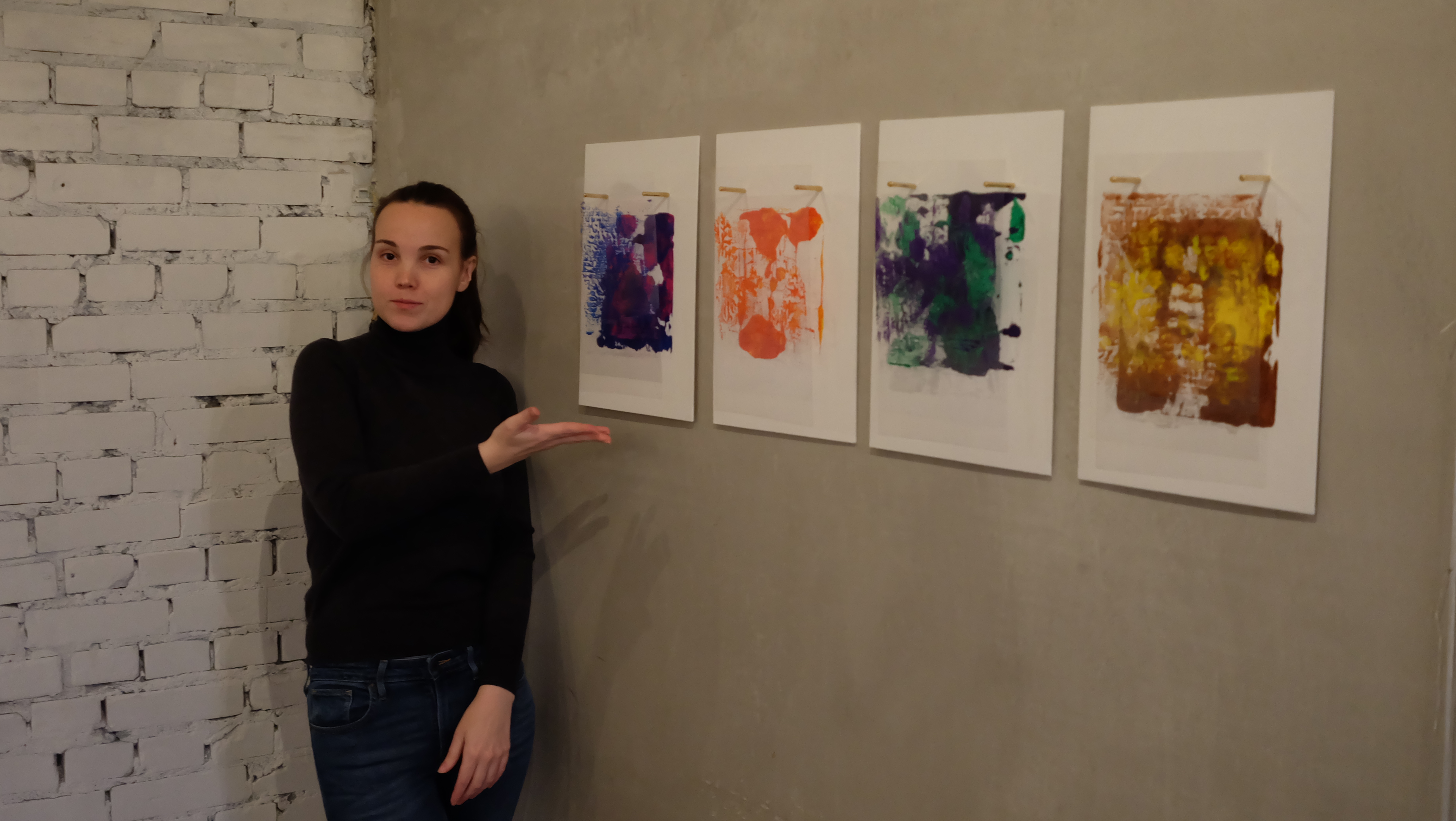
First, «Artists of My Heart» is Fluxus. Second, «Artists of My Heart» is Dasha Weisbrem's experiments in the «Multivariance» style: where the viewer, according to the artist's concept, can and should become a co-author in creating the artwork. Technically, it looks like this:
-
«Canvases». Four works created using the monotype method (applying paint to a textured surface/object and pressing this object onto the canvas. This results in a completely unique imprint on the canvas): «Van Gogh», «Bonnard», «Cézanne», and «Matisse».
-
«Imprints No.1». Four second imprints from the same objects, made immediately after the first imprints – but now on transparent plastic, not on canvas.
-
«Imprints No.2». Four third imprints from the same objects – again applied to transparent plastic.
-
«Mounting system». A structure that allows the canvases with first imprints to be attached to the wall, while the transparent plastic with second or third imprints can be attached to the canvases. This way, the transparent plastic with the image/imprint «lies» over the image on the canvas (the distance between the canvas and transparent plastic is about 5 cm). That is, the image on the canvas can only be seen through the image on the transparent plastic.
All this creates a very unique perception effect of the entire structure.
And not only must you look at the first imprint through the transparent second one. But the imprints on transparent plastic can also be mounted on the canvases in any combination.
For example, you can place the plastic with the second imprint from the same work on the «Van Gogh» canvas. And do the same with the other works: «Bonnard» to «Bonnard», «Cézanne» to «Cézanne», etc.
But – you can also randomly swap the imprints. Mount «Van Gogh» on «Cézanne», mount the «Matisse» imprint on «Bonnard».
Furthermore, there are options – you can mount either the second or third imprints, alternating them. And in any order. The number of variants is enormous.
And each time we get a new artwork. Your unlimited imagination, as well as lighting, allow creating numerous combinations. An unlimited number of combinations!
...which is essentially what the «Multivariance» cycle is about – the equality of viewer and artist, we together create the artwork.
And overall, this is the artist's tribute to her passion for Fluxus, her loyalty to the 12 principles of Fluxus according to Ken Friedman («12 Ideas of Fluxus» – the title of an article by Ken Friedman, the main theorist of Fluxus).
Canvas on cardboard, acrylic, 30×40 cm, 2018
* Dasha Weisbrem's Solo exhibition "Multivariance: Artists of My Heart", Obninsk, 2019
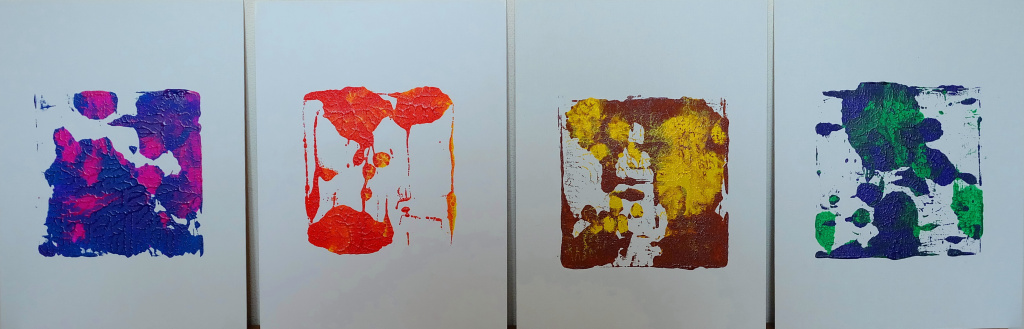
«Matisse», «Van Gogh», «Bonnard», «Cézanne».

Imprints No.1
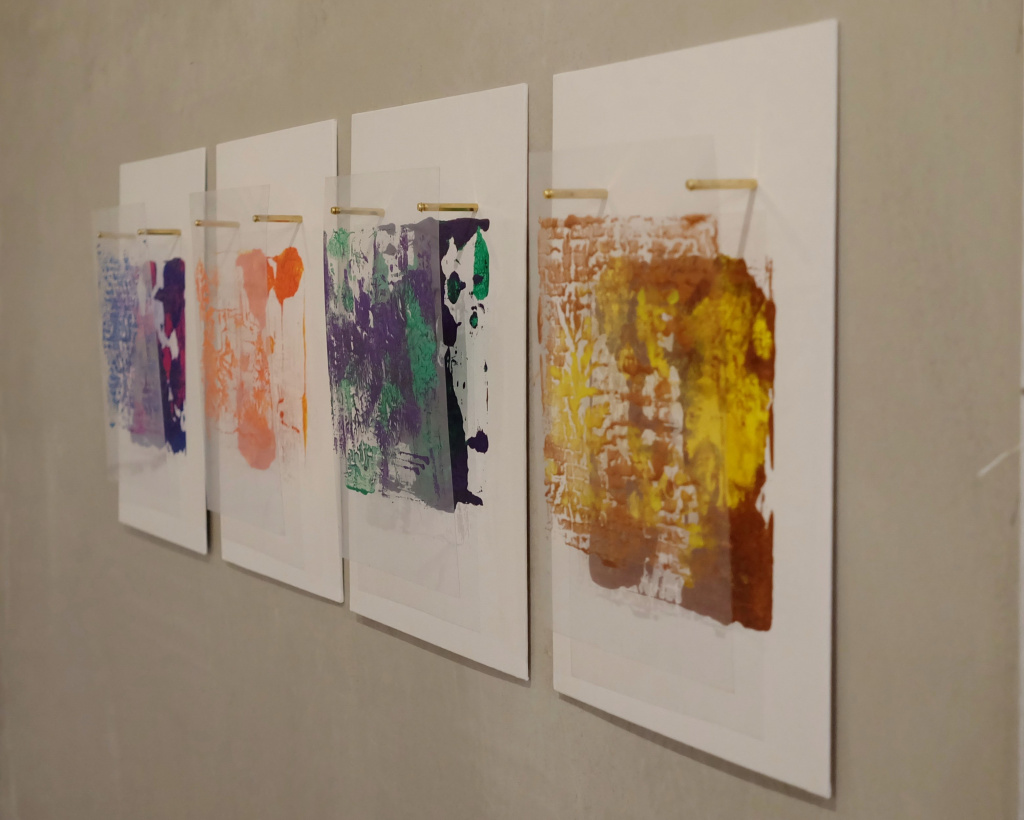
Mounting system
* Close-up
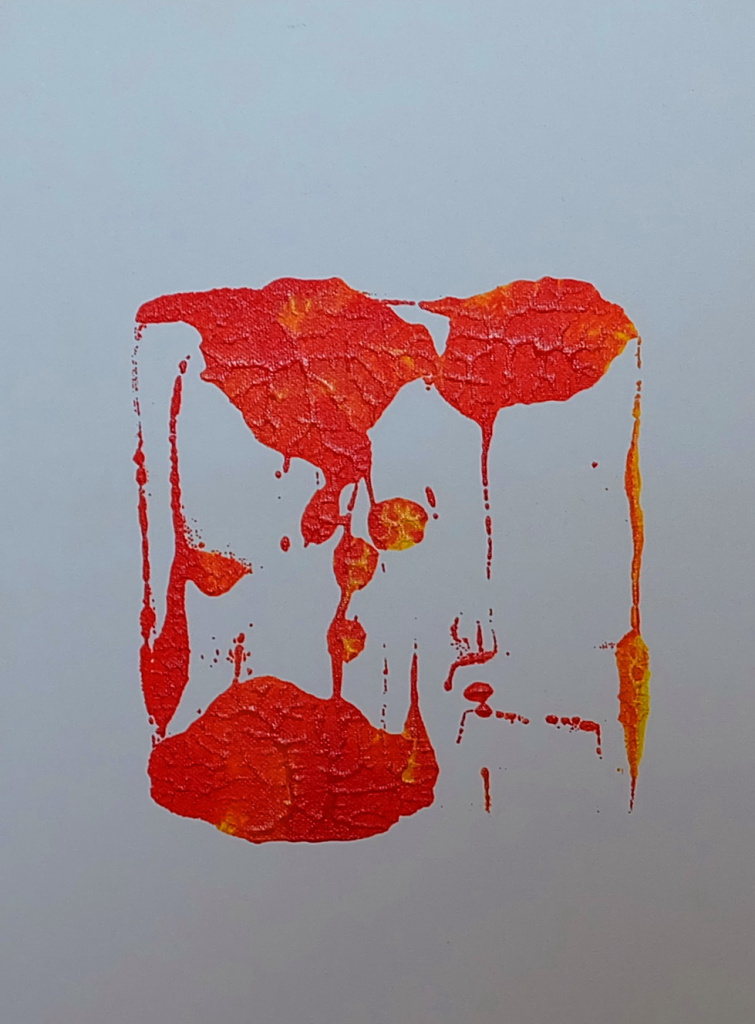
Vincent van Gogh
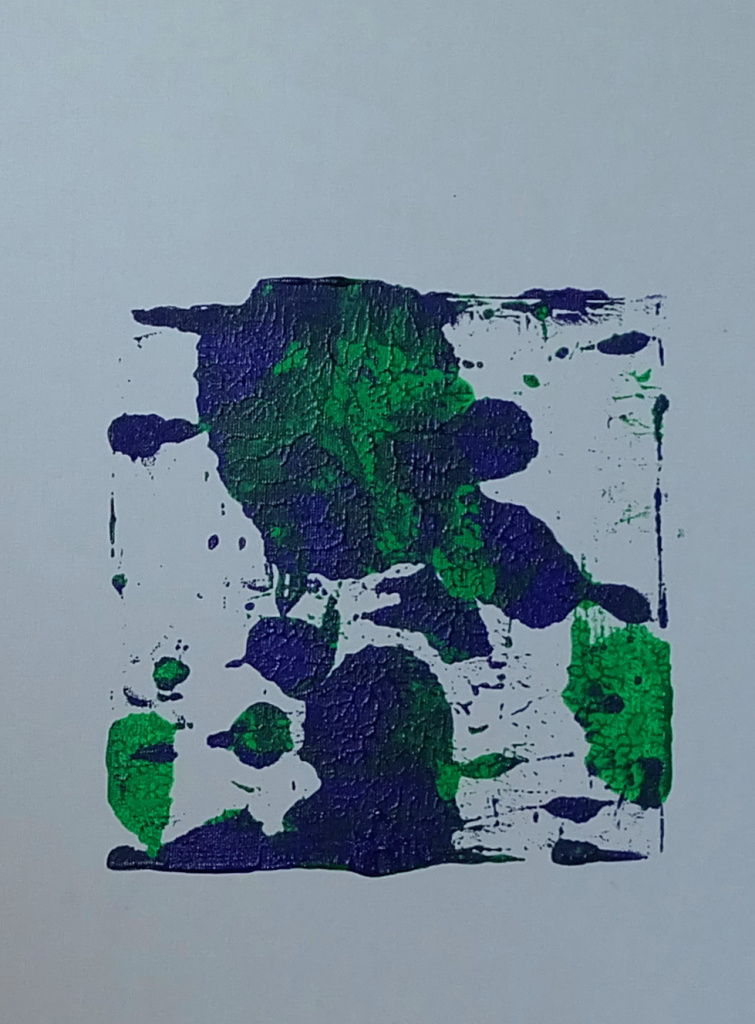
Paul Cézanne
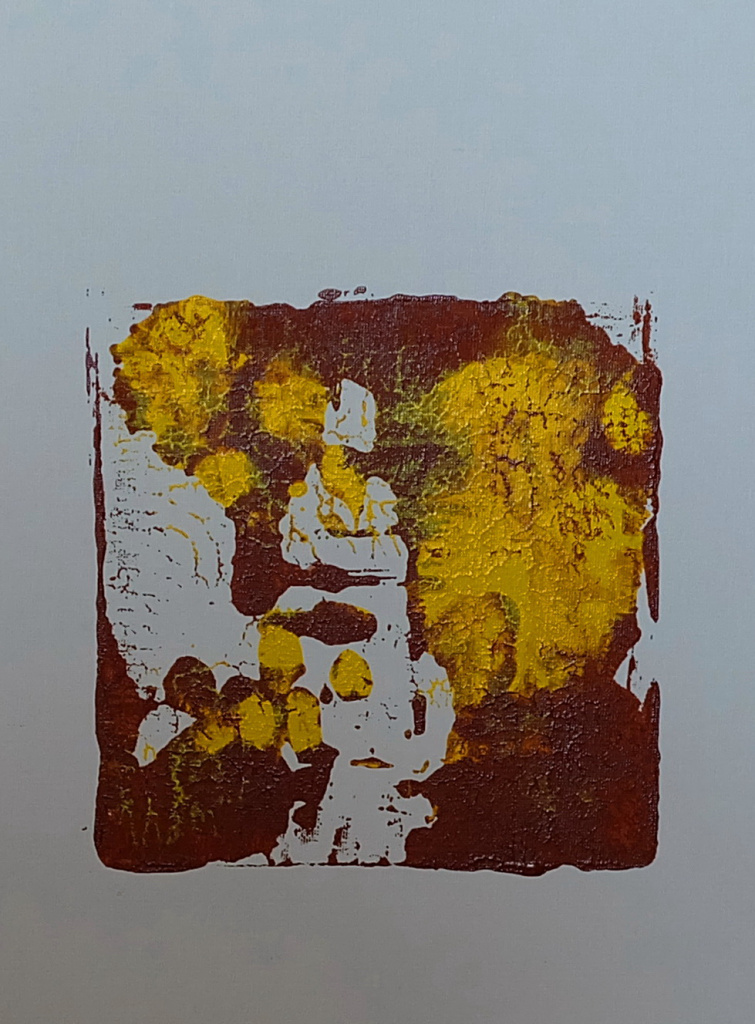
Pierre Bonnard
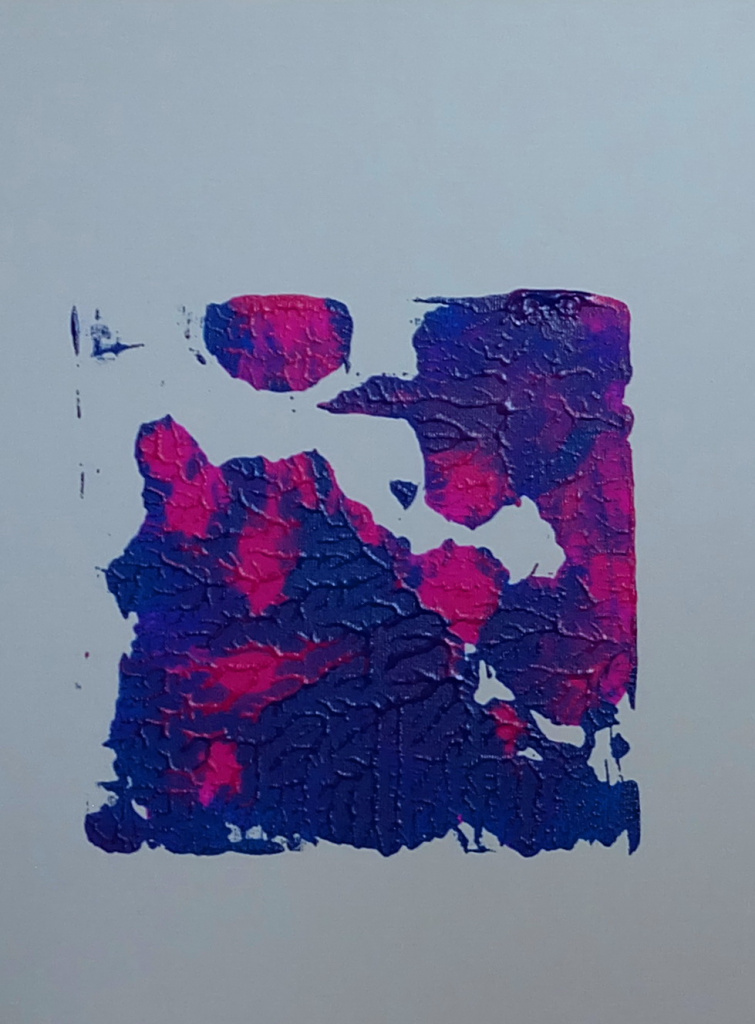
Henri Matisse
....
Многовариантность: Художники моего сердца
Во-первых, «Художники моего сердца» – это Флюксус. Во-вторых, «Художники моего сердца» — это опыты работы Даши Вайсбрем в стиле «Многовариантность»: когда зритель, по замыслу автора, может и должен стать соавтором художника в создании произведения искусства. А технически это выглядит так:
-
«Холсты». Четыре работы, сделанные методом монотипии (нанесение краски на рельефную поверхность/предмет и прикладывание данного предмета к холсту. В результате на холсте получается совершенно уникальный оттиск): «Ван Гог», «Боннар», «Сезанн» и «Матисс».
-
«Оттиски №1». Четыре вторых оттисков с этих же предметов, сделанных сразу после первых оттисков – но уже не на холст, а на прозрачный пластик.
-
«Оттиск №2». Четыре третьих оттиска с этих же предметов – и снова нанесенные на прозрачный пластик.
-
«Крепеж». Конструкция, посредством которой холсты с первыми оттисками крепятся к стене, а прозрачный пластик со вторыми или третьими оттисками могут крепиться к холстам. Так, чтобы прозрачный пластик с изображением/оттиском «лежал» поверх изображения на холсте (расстояние между холстом и прозрачным пластиком около 5 см). То есть увидеть изображение на холсте можно только через изображение на прозрачном пластике.
Все это дает весьма своеобразный эффект восприятия всей конструкции.
И, мало того, что смотреть на первый оттиск надо через прозрачный второй. Но еще оттиски на прозрачном пластике можно монтировать на холсты в любых сочетаниях.
Например, можно на холст «Ван Гог» установить пластик со вторым оттиском с этой же работы. И тоже самое проделать и с остальными работами: «Боннар» к «Боннару», «Сезанн» к «Сезанну» и т.д.
Но – можно еще произвольно поменять оттиски местами. На «Сезанна» смонтировать «Ван Гога», на «Боннара» – оттиск с «Матисса».
Кроме того, есть варианты – установить можно вторые или третьи оттиски, чередуя их. И в любом порядке. Вариантов – огромное количество.
И каждый раз мы получаем новое произведение искусства. Ваша безграничная фантазия, а также освещение позволяют создавать множество комбинаций. Неограниченное количество комбинаций!
…о чем, собственно, и цикл «Многовариантность» - равенство зрителя и художника, мы вместе создаем произведение искусства.
А в целом это дань художника его увлечению Флюксусом, его верность 12 принципам Флюксуса по Кену Фридману («12 идей Флюксуса» — так называется одна из статей Кена Фридмана, главного теоретика Флюксуса).
Холст на картоне, акрил, 30х40, 2018